Shape-shifting:Race 3D
SixcubeRacing
4.0530.00 Reviews
- Version
- 2.5.2
- Installs
- 100.00M
- Age Rating
- Everyone
Screenshots
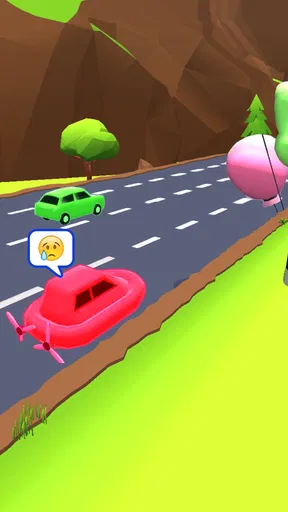
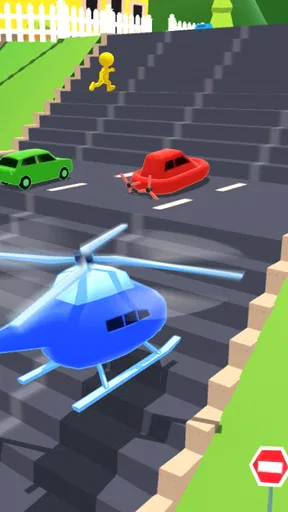
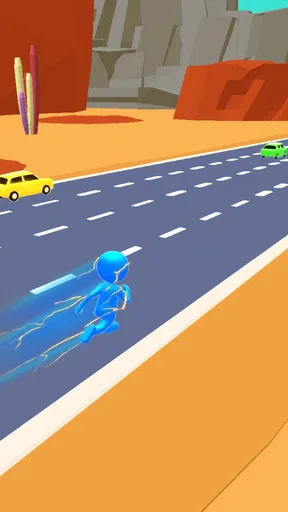
Our Review of Shape-shifting:Race 3D
 Analysis by Appyee
I find the appeal of Shape-shifting: Race 3D easiest to understand in a short break: the race asks me to watch the route and pick a form that suits the surface, rather than master a long list of controls. That makes it approachable when I want a quick mobile challenge, but it also means the fun depends on whether I enjoy reacting under time pressure. If I’m looking for deep vehicle handling or a story to settle into, this is not the kind of racing game I would choose.
A quick decision game, not a driving simulator
Sixcube’s racing game is built around changing your character’s shape to handle different terrain. The central hook is not steering a car through a detailed track; it is recognizing what the next stretch calls for and switching in time. I like that the idea is readable almost immediately. The challenge comes from applying it consistently as the course moves on, not from learning a complicated control scheme.
That distinction helps set expectations. Compared with conventional mobile racers, where a player may focus on braking, drifting, vehicle tuning, or taking a racing line, this one puts more weight on quick recognition and selection. It suits someone who wants races that feel brisk and easy to pick up. If the satisfaction you want comes from fine control of a vehicle, a more traditional racer will probably hold your attention longer.
Where it fits into an everyday break
I can see myself opening it while waiting for a kettle to boil or sitting through a short gap between errands. A race gives that spare moment a clear task: look ahead, respond to the terrain, and see whether I can stay ahead. It is easier to dip into than a game that asks me to remember a long quest or return to a carefully managed team, and that makes its shape-changing premise a practical fit for brief sessions.
There is a useful trade-off here. Short, direct play is convenient, but it can also make the experience feel repetitive if I keep playing after the basic switching pattern has become familiar. I would treat it as a light pick-up-and-play option rather than assume every session will offer a new kind of racing. If I only have a few minutes, that compact focus is a strength; if I want a longer evening game, I would look for more layers of progression or more involved races.
What the controls ask of you
The most useful habit is to look beyond the immediate patch of track. Waiting until a terrain change is already underneath you can turn a simple decision into a rushed one, while watching slightly ahead gives you time to choose a form deliberately. I also find it sensible to pay attention to the result of each switch: if I keep changing too early or too late, I can adjust on the next attempt instead of treating every loss as bad luck.
This is a small but meaningful distinction between reacting and learning. The game’s premise rewards anticipation, yet quick play can tempt me to tap without really reading the route. When a run goes poorly, I would focus on the moment the surface changed and ask whether my choice was mistimed or simply unsuitable. That makes retries more useful and gives the simple mechanic a little more substance.
Who is likely to enjoy it
I would recommend it to players who like accessible racing, visual variety, and a compact challenge that does not demand specialist knowledge. It can also work for younger players and families looking for an easy-to-grasp game: it carries an Everyone age rating, and the basic idea is simple to explain. That does not mean every player will find it equally engaging. Someone who wants realistic driving, a large collection of tuning options, or a serious simulation should choose a different kind of racer.
The game is free to start, with in-app purchases listed at $2.99 per item. I would decide whether it suits me based on the core races before spending anything; the central appeal is the act of adapting, so a purchase only makes sense if I already enjoy that loop. It is also worth remembering that free-to-play games can have optional purchase prompts. I would check what an item offers in the game before assuming it changes the experience in a particular way.
Gameplay and Mechanics
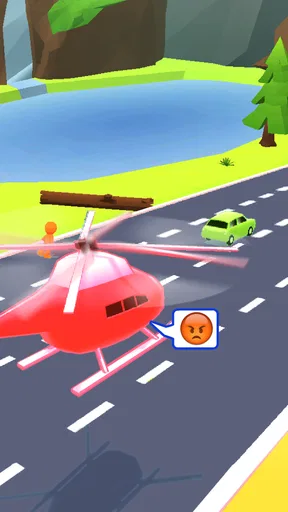
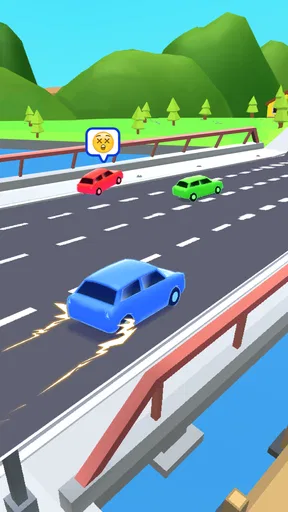
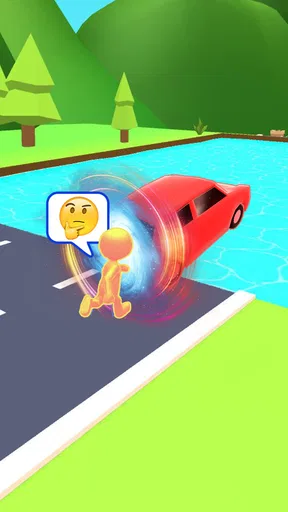
The core idea of Shape-shifting: Race 3D is to morph your character into different forms to tackle various terrains and obstacles. Whether it’s transforming into a boat to glide over water, a plane to soar through the air, or a car to speed along the road, each shape has its unique strengths and weaknesses. The challenge lies in quickly and strategically changing shapes to maintain your momentum and outpace your opponents.
What I love about the game is how it keeps you on your toes. You’re constantly analyzing the path ahead, deciding which form will get you through the next stretch the fastest. It’s not just about speed but also about timing and precision. One wrong move, and you might find yourself lagging behind or, worse, getting stuck in an obstacle you can’t pass.
Visuals and Soundtrack
Visually, the game is a treat. The graphics are vibrant and colorful, making each race an exciting visual experience. The animations are fluid, and the transitions between shapes are seamless, adding to the overall thrill of the race. The game’s aesthetic is playful, with a touch of whimsy that makes it appealing to both kids and adults.
The soundtrack complements the fast-paced nature of the game perfectly. The music is upbeat and energetic, driving you to keep pushing forward. The sound effects for each shape transformation and interaction with the environment are well-crafted, adding an extra layer of immersion to the gameplay.
What Keeps You Coming Back?
One of the standout features of Shape-shifting: Race 3D is its replayability. Each race is different, thanks to the dynamic obstacle placements and varying terrains. It’s this unpredictability that keeps you hooked, always trying to improve your strategy and beat your best time.
The game also includes a competitive element with leaderboards and multiplayer races. It’s not just about completing the course; it’s about being the fastest among your friends or even globally. This competitive edge can be incredibly motivating, as you strive to climb the ranks and boast about your achievements.
Learning Curve and Challenges
Now, let’s talk about the learning curve. Initially, you might find yourself getting stuck or transforming into the wrong shape at the wrong time. But fear not! The game does a great job of easing you into its mechanics. After a few rounds, you’ll start to get the hang of it. The key is practice and understanding the strengths and limitations of each shape.
As you progress, the game introduces more complex obstacles and faster-paced levels. It’s this gradual increase in difficulty that keeps the game fresh and engaging. You’re always learning and adapting, which is a testament to the thoughtful design behind the game.
What its current version tells me
The game launched on April 2, 2021, and its current version is 2.4.6. That gives me a straightforward snapshot of a title that has continued to receive version updates, but a version number by itself does not tell me what each update changed. I would not assume that a particular feature, course, or balance adjustment arrived in a specific release without checking the game’s current notes.
For someone returning after a break, the practical approach is to judge the build in front of them: revisit the controls, try a few races, and see whether the pace and obstacles still suit their taste. New players can simply start with the basic switching rhythm. In either case, the important evidence is how the game feels to play now, rather than guesses about its update history.
Scale, expectations, and trade-offs
With more than 100 million installs and an average rating of 4.0 from around 136,000 ratings, it has reached a very broad mobile audience. Those figures suggest plenty of people have tried it, but they are not a guarantee that its central mechanic will click for me. A large audience can include casual players who enjoy a quick race as well as people who leave after deciding that the format is too repetitive.
There are also 532 written reviews, which can help me spot recurring impressions, though I would read recent comments rather than rely on a single reaction. Ratings are a useful starting point, not a substitute for matching the game to what I want. Its free entry lowers the barrier to trying it; the more important question is whether I enjoy making rapid terrain-based decisions after the novelty wears off.
Small habits that make retries more useful
I would avoid changing form simply because a new section is coming into view. Instead, I would connect each visible surface with the form that handles it, then switch when the transition is close enough to matter. That keeps the decision tied to what the course is asking for, rather than turning every race into frantic tapping. If I fall behind, I would focus on the next terrain change instead of making several rushed corrections in a row.
Another useful way to play is to make one adjustment per retry. If I change my timing and my choice of form at the same time, it is hard to know which adjustment helped. Keeping the experiment simple turns a loss into feedback. This is not a complicated training method, just a way to get more satisfaction from a game whose main skill is noticing a pattern and responding cleanly.
What to watch as you decide
The main question for me is whether the switching mechanic stays enjoyable once it becomes familiar. If I like short races and learning through repeated attempts, the simple loop can remain appealing. If I need elaborate track strategy, realistic vehicle behavior, or a strong sense of long-term development, I may reach the limit sooner and would be better served by another racing game.
It is available free, is rated for Everyone, and has in-app purchases at $2.99 per item. The minimum operating-system requirement is Android 7.0. Those details make it easier to decide whether it is suitable for a device and household, while the game itself is still the best test of whether its quick adaptation feels rewarding. I would try it as a casual racer first, keep purchases optional, and move on if the repeated terrain-and-form decisions are not what I want from racing.
Visuals and Soundtrack
Visually, the game is a treat. The graphics are vibrant and colorful, making each race an exciting visual experience. The animations are fluid, and the transitions between shapes are seamless, adding to the overall thrill of the race. The game’s aesthetic is playful, with a touch of whimsy that makes it appealing to both kids and adults.
The soundtrack complements the fast-paced nature of the game perfectly. The music is upbeat and energetic, driving you to keep pushing forward. The sound effects for each shape transformation and interaction with the environment are well-crafted, adding an extra layer of immersion to the gameplay.
What Keeps You Coming Back?
One of the standout features of Shape-shifting: Race 3D is its replayability. Each race is different, thanks to the dynamic obstacle placements and varying terrains. It’s this unpredictability that keeps you hooked, always trying to improve your strategy and beat your best time.
The game also includes a competitive element with leaderboards and multiplayer races. It’s not just about completing the course; it’s about being the fastest among your friends or even globally. This competitive edge can be incredibly motivating, as you strive to climb the ranks and boast about your achievements.
Learning Curve and Challenges
Now, let’s talk about the learning curve. Initially, you might find yourself getting stuck or transforming into the wrong shape at the wrong time. But fear not! The game does a great job of easing you into its mechanics. After a few rounds, you’ll start to get the hang of it. The key is practice and understanding the strengths and limitations of each shape.
As you progress, the game introduces more complex obstacles and faster-paced levels. It’s this gradual increase in difficulty that keeps the game fresh and engaging. You’re always learning and adapting, which is a testament to the thoughtful design behind the game.
A verdict based on the core loop
My recommendation is simple: give it a try if you want a colorful, low-commitment racing game built around fast choices, not realistic driving. I would skip it if I mainly play racers for precise steering, deep customization, or extended progression. The strongest reason to stay is the satisfaction of anticipating a terrain change and picking the right form; the clearest reason to leave is when that repeated decision starts to feel like the whole game rather than its enjoyable hook.
For me, that makes Shape-shifting: Race 3D best as an occasional pick-up game. I would keep expectations focused on its quick races, use retries to improve timing instead of tapping blindly, and decide for myself whether the competition and changing courses add enough variety. If that compact challenge fits the gaps in your day, it is an easy game to sample; if you want a deeper racing hobby, another title will be a better match.
Verdict
Strengths of Shape-shifting:Race 3D
- Engaging gameplay keeps you hooked.
- Vibrant graphics enhance the experience.
- Easy controls suitable for all ages.
- Regular updates with new challenges.
- Offline mode available for travel play.
Limitations of Shape-shifting:Race 3D
- May include frequent ads.
- In-app purchases can be pricey.
- Some levels feel repetitive.
- Requires a stable device for smooth play.
- Occasional bugs disrupt gameplay.
Other Releases by Sixcube
View All
Bus Arrival
Racing4.4
Similar Picks in This Category
View All
Hill Climb Racing
Fingersoft4.3

Dr. Driving
SUD Inc.4.2

Traffic Rider
skgames4.5

Asphalt 8 - Car Racing Game
Gameloft SE4.6

Race Master 3D: Car Racing
Beresnev Games4.6

Extreme Car Driving Simulator
AxesInMotion Racing4.3
Frequently Asked Questions
What is the main objective of Shape-shifting: Race 3D?
The main objective of Shape-shifting: Race 3D is to navigate through various terrains by transforming your character into suitable forms, such as a car, boat, or plane, to efficiently race against opponents. The game challenges players to think quickly and adapt to different environments to win races.
Does Shape-shifting: Race 3D require an internet connection to play?
While Shape-shifting: Race 3D can be enjoyed offline in its single-player mode, some features like leaderboards and multiplayer may require an internet connection. Playing offline allows you to explore the game at your own pace, but connecting online can enhance the competitive experience.
Are there in-app purchases in Shape-shifting: Race 3D?
Yes, Shape-shifting: Race 3D includes in-app purchases that allow players to buy skins, power-ups, and other enhancements. While these purchases can enhance gameplay and offer more customization options, they are not necessary to enjoy the core experience of the game.
What platforms is Shape-shifting: Race 3D available on?
Shape-shifting: Race 3D is available for both Android and iOS devices. The game can be downloaded via the Google Play Store for Android users and the Apple App Store for iOS users, offering a seamless gaming experience across mobile platforms.
Is Shape-shifting: Race 3D suitable for all ages?
Shape-shifting: Race 3D is designed to be family-friendly and suitable for players of all ages. The game features vibrant graphics and straightforward mechanics, making it accessible to younger players, while the strategic elements and competitive races appeal to older audiences as well.
Play our best games!


